By Agnes · Handy Beach Goods · Last updated September 2026
The 30-second version: A week's vacation is five beach days. A snowbird season is closer to sixty-five. That single difference changes what's worth buying, what's worth the trunk space, and what will be broken by February. Here's what we'd pack — from a Florida company that watches this happen every winter.
The math nobody does before they drive south
Most beach gear is designed, priced, and reviewed for the person who uses it four or five times a year. You buy it in May, it survives the summer, you replace it next season, and nobody thinks much about it.
Snowbirds are a completely different case, and almost nothing in the category is built for them.
Run the numbers. A typical season runs from early November to late March — roughly 150 days. If you get to the beach three or four times a week, which is why most people came south in the first place, that's 60 to 90 outings. More if you walk down every morning.
So the $29 umbrella that holds up for fifteen outings isn't cheap. It's four umbrellas a season, and each one fails at the worst possible moment — usually on a windy Tuesday when you've already carried everything down and the nearest replacement is a forty-minute round trip.
The honest way to think about it: divide the price by the number of days you'll actually use it. At sixty-five outings, almost everything decent becomes inexpensive, and almost everything disposable becomes expensive.
What earns space in the car
If you're driving down — and most snowbirds are, often 1,000 miles or more with the car already full — every item competes for room against everything else you own.
A simple rule that works: bring what you'll use daily and would be annoyed to re-buy. Buy locally what's bulky, cheap, and easy to find.
| Bring it with you | Buy it when you arrive |
|---|---|
| Shade — used every single day, and the local options are the disposable kind | Cooler — bulky, and every grocery store has one |
| A proper blanket or mat — packs flat, transforms the day | Towels — heavy, and you'll want beach-only ones anyway |
| Small organizers (wristlets, dry bags) — no space cost at all | Chairs, if you're tight on room — though bring your own if you have a favorite |
| Anything you've already learned you can't do without | Sunscreen — cheaper by the bottle locally, and you'll go through a lot |
Shade is the one item where this rule points clearly in one direction, and it's worth explaining why.
Shade is the piece that gets used every single day
Two things about a snowbird season make shade the highest-stakes item in the car.
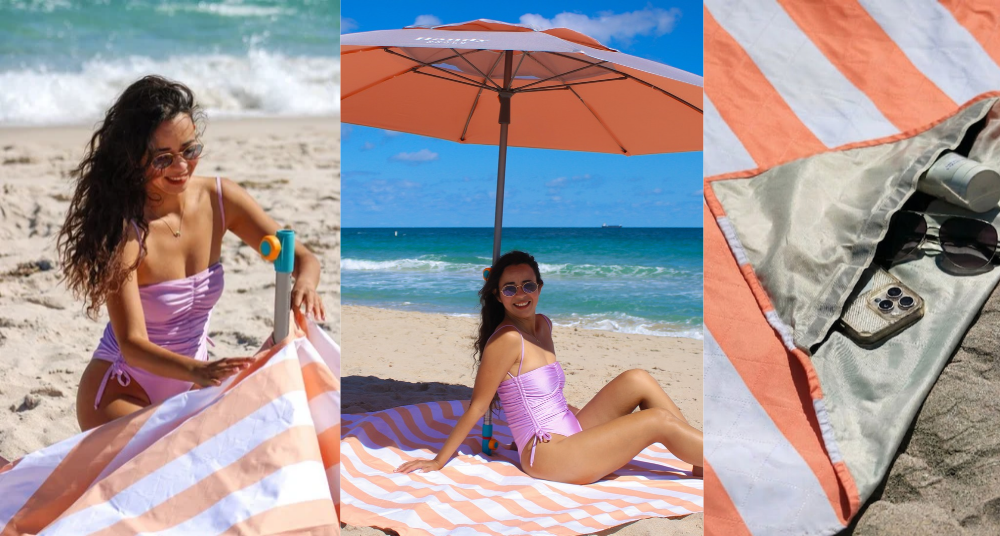
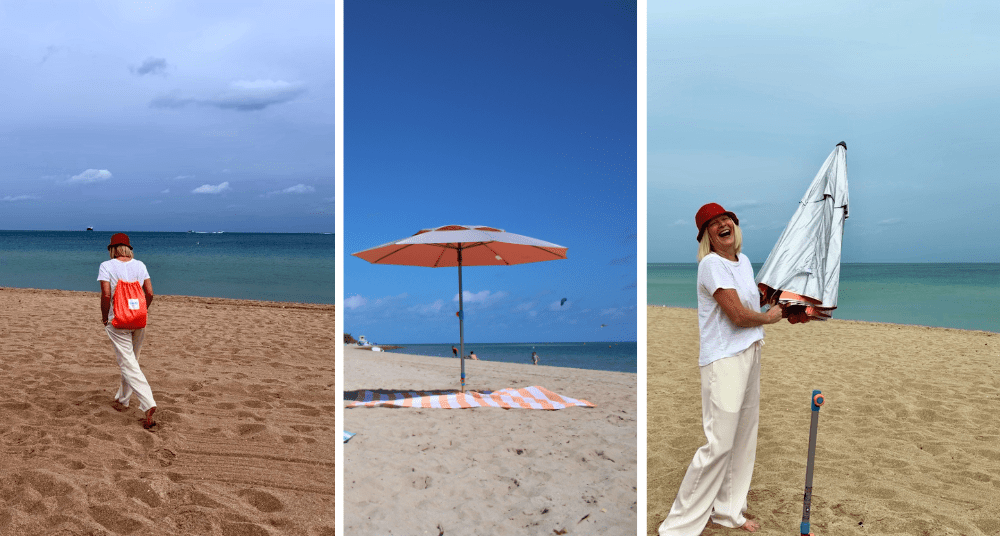
First: setup time compounds. Nobody thinks about the ten minutes spent digging a hole and packing sand around a pole. But at sixty-five outings, two minutes each way is well over three hours of your season spent burying and un-burying an umbrella. Our Umbrella & Anchor System ($149.99) uses a hammer-in anchor that goes two feet into the sand in about ten seconds, with no digging and no sandbags. On a single vacation that's a convenience. Over a season it's a genuinely different experience of going to the beach.
Second — and this surprises people — winter is the windy season. Florida's strongest sustained coastal winds don't arrive in July. They arrive with the cold fronts that push through from roughly November to April, which is exactly when you're there. A summer visitor might never see 20 mph onshore. A snowbird will see it repeatedly.
That's the reason we built the system the way we did. The umbrella has been independently wind tunnel tested and is compliant with ASTM F3681, the safety standard for beach umbrellas and anchors, at wind speeds up to 30 mph. If you're only reading one spec before you buy anything, read that one — an umbrella that comes out of the sand is not a minor inconvenience, it's a projectile on a crowded beach.
One practical note for long stays: four months of daily salt and sand is hard on any gear. Rinse the pole and anchor with fresh water when you can. If something does wear out mid-season, the Maintenance Kit ($15) and Replacement Canopy ($75) mean you're replacing a part, not the whole thing.
Winter sun is not summer sun — but it still burns
This is the most common mistake we see in snowbird season, and it's an easy one to make. The air is pleasant, there's a breeze, nothing feels punishing, so people spend four hours out and skip the shade.
South Florida's midday UV index in January typically sits in the 4 to 7 range — moderate to high. That's meaningfully below an August peak, and it is still enough to burn unprotected skin in well under an hour. More to the point, the relevant exposure isn't one afternoon. It's four months of near-daily exposure, which is a very different total than a week in July.
Our canopy was independently lab tested to block 99.99% of UV. The silver top layer reflects rather than absorbs, so the air underneath stays noticeably cooler than it does under a dark-colored canopy — which matters more than you'd expect when you're out there most days. If you want the detail on how fabric ratings actually work, we wrote about it in UPF vs SPF.
Two small things that make daily sun protection more likely to actually happen: the Sand Remover & Sunscreen Applicator Glove ($12.99), because reapplying sunscreen with sandy hands is the reason most people don't reapply, and a reliable spot to keep the bottle out of direct heat.
The rules are different down here — and they change by town
This one catches people out badly, because the rules where you spend the summer are often nothing like the rules where you spend the winter.
Beach regulations in the US are set at the town or county level, not the state level, which means they can change from one stretch of sand to the next. Tents and canopies are banned outright in a growing number of places. Umbrella height limits are common. Some towns require anchoring. Belleair Shore, Florida went furthest and banned beach umbrellas entirely.
If you're settling somewhere for four months, it's worth ten minutes on your town's website before you buy anything — and worth checking again each season, because these rules are being tightened most years. We keep a running guide to what's changed: beach canopy and tent bans, rules and fines.
The general pattern, if you want the short version: a standard-height beach umbrella is permitted in far more places than a tent or canopy is, and in the towns that regulate most strictly, a properly anchored umbrella is usually the thing that's still allowed.
The rest of the kit
Beyond shade, three things earn their space for a long stay:
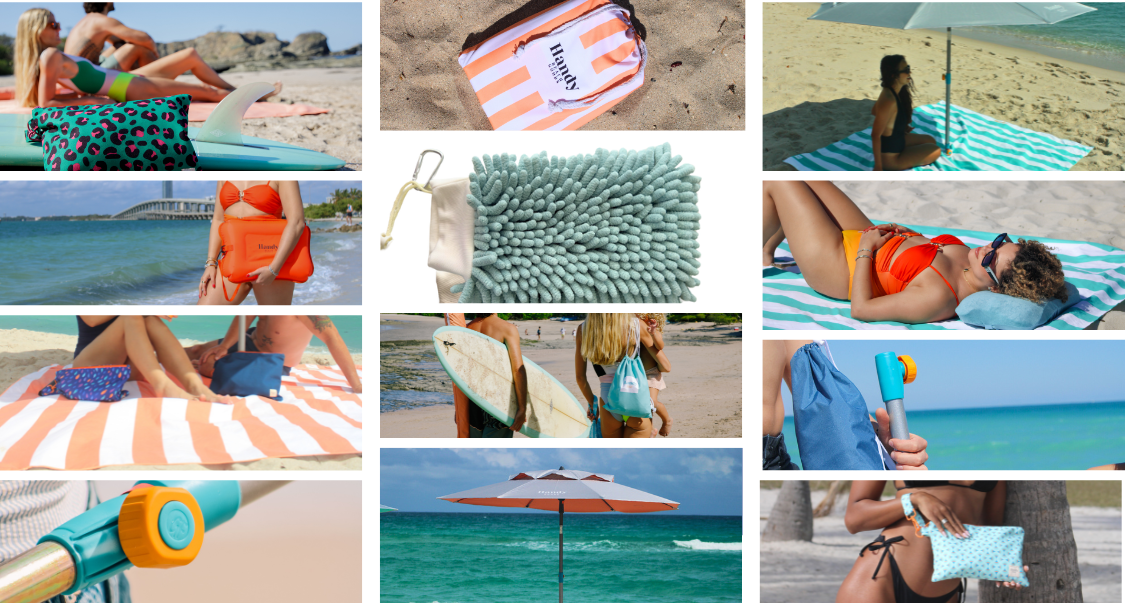
- Oversized Waterproof & Sand-Repellent Beach Blanket ($49.99) — 7ft x 7ft with a waterproof underside and a port for the umbrella pole. Packs flat, so it costs you almost nothing in the car. If you're at an age where getting up off the ground is easier from a stable surface than a shifting towel, this is the quiet upgrade.
- Wet/Dry Beach Wristlet (from $22) — for the walk to the snack bar, the pool, or the club without carrying a whole bag. Keeps a phone and keys dry and sand-free.
- 3-in-1 Inflatable Beach Pillow, Dry Bag & Swim Buoy ($35) — packs down to nothing, and if you're swimming most days the buoy function is a reasonable piece of extra safety.
What to leave at home
- Anything you bought for one specific trip. If it didn't survive last summer, it won't survive this season.
- A pop-up tent or canopy, unless you've confirmed your specific beach still permits one. Check before it takes up half the car.
- Full-size towels. Heavy, slow to dry in humidity, and you'll want dedicated beach ones anyway.
- A second cooler. There is always a second cooler. Nobody has ever needed it.
Buying for a snowbird?
This has quietly become one of the most common things we ship in November and December: adult children buying beach gear for a parent heading south for the season. It's a good gift, for a simple reason — a retired parent who gets to the beach three or four times a week will use it more than almost anyone else on your list will use anything you buy them.
Two practical tips. Ship to their winter address, not their summer one — it avoids the checked-luggage problem entirely. And if they're driving down, ship to arrive before they leave so it goes in the car.
We put together a full guide organized by who you're shopping for: Best Beach Gifts 2026.
Frequently asked questions
Is it actually windier in Florida in the winter?
Along the coast, generally yes. The cold fronts that move through from late fall into spring bring sustained onshore winds that summer mornings rarely produce. It's the main reason gear that felt fine on a July vacation can struggle over a full snowbird season.
Do I need sun protection in January?
Yes. South Florida's midday UV index in mid-winter commonly sits in the moderate-to-high range, which is enough to burn in under an hour — and a snowbird's exposure is cumulative across four months, not one week.
Should I just buy beach gear when I get there?
For bulky, cheap, easily replaced things — coolers, towels, sunscreen — yes. For shade, no. The gear available in beach-town shops is priced and built for a one-week visitor, which is the wrong product for someone using it sixty-plus times.
Can I leave my gear down there over the summer?
Many people do. Rinse everything in fresh water, dry it fully before storing, and keep it out of direct sun — UV degrades fabric faster than salt does. Storing a damp canopy is the fastest way to ruin one.
Are tents and canopies allowed on Florida beaches?
It depends entirely on the town, and restrictions have been expanding. Check your specific beach's rules before you pack one. A standard beach umbrella is permitted in considerably more places than a tent or canopy — though a handful of towns regulate umbrellas too, so it's still worth a look.
About the author: Agnes is the co-founder of Handy Beach Goods. She started the company in Florida after one too many umbrellas went airborne on a family beach day, and has spent years testing beach gear with two kids in tow.