30-second takeaway: The hole in the middle of a beach blanket is a port for your umbrella pole, and it exists so the shade actually lands on the blanket instead of beside it. Almost nobody builds one in, because a hole in fabric is a weak point unless it's reinforced. If you're shopping for one, check three things: that the port is reinforced rather than slit, that the blanket is wide enough for your canopy's shade circle, and that the corners stay down without separate stakes.
What the hole is actually for
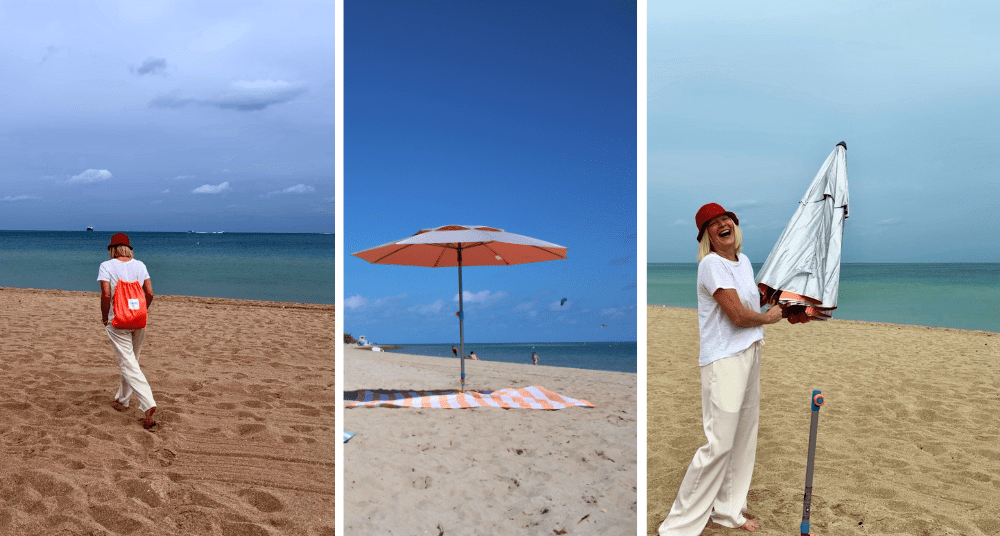
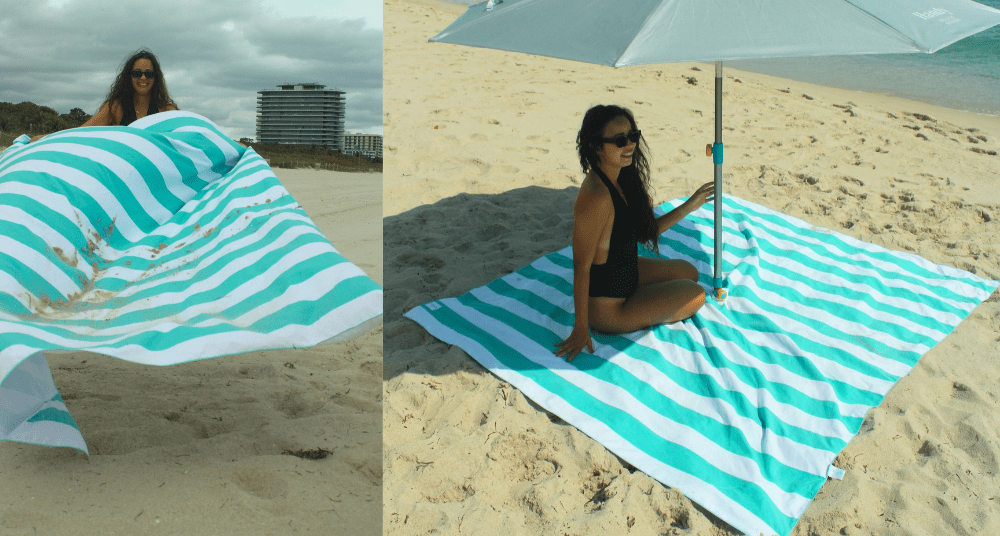
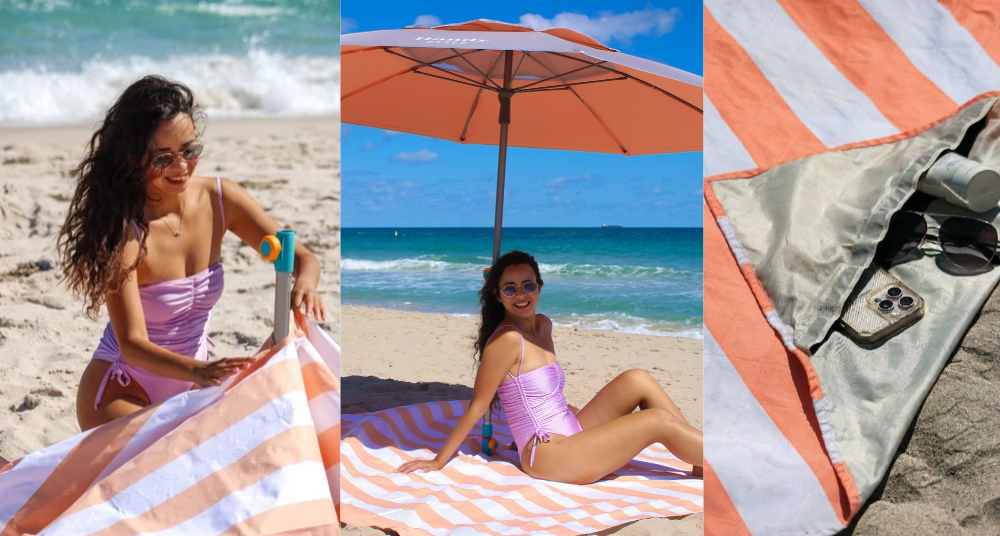
You put your umbrella pole through it. The blanket then sits centred under the canopy, anchored by the same pole that's holding your shade up.
That sounds trivial. It isn't, and the reason is geometry.
A 7ft beach umbrella throws a shade circle roughly 7ft across — and that circle moves, because the sun moves. If your blanket is next to the pole rather than around it, you spend the afternoon shuffling the blanket, or you give up and let half of it bake. If the pole goes through the middle of the blanket, the shade and the blanket share a centre point, and the circle stays on fabric for far longer.
It also solves a smaller irritation that turns out to matter: the pole isn't standing in loose sand at the edge of your setup where people trip on it and kick sand onto the blanket. It's in the middle, where it belongs.
Why almost nobody builds one in
Because cutting a hole in the middle of a sheet of fabric creates a tear point, and a tear point in the middle of a blanket that gets pulled, sat on and shaken is a warranty problem waiting to happen.
Doing it properly means reinforcing the opening — binding the edge so load spreads outward into the fabric rather than concentrating at the rim. That's an extra manufacturing step on a product category that mostly competes on price, which is why you'll find hundreds of beach blankets and a handful with a port.
The three workarounds, and why each one fails
- Blanket beside the umbrella. Works for about forty minutes. Then the sun moves, the shade slides off the fabric, and you're repositioning the blanket with everyone still sitting on it.
- Cutting a hole yourself. Tempting and genuinely a bad idea. An unbound cut in woven fabric propagates — the first time someone catches a foot in it, the slit becomes a tear, and the tear keeps going. If you're going to do it anyway, bind the edge first with a buttonhole stitch or a grommet.
- Two smaller blankets either side of the pole. Twice the sand entry points, two sets of corners to weigh down, and a gap down the middle exactly where you were going to lie down.
What to look for if you're buying one
1. A reinforced port, not a slit
Look for a bound or stitched opening. If the listing photo shows a raw cut, assume it will tear. This is the single feature that separates a blanket designed around the hole from one that had a hole added to it.
2. A blanket wide enough for the shade circle
This is the one people get wrong. A 5ft blanket under a 7ft canopy means the shade is landing on sand around all four edges, and you've gained very little. Match the blanket roughly to the canopy — a 7ft canopy over a 7ft × 7ft blanket keeps the shade on fabric almost all day.
3. Corners that stay down on their own
The pole in the middle holds the centre. It does nothing for the edges, and a lifting corner is how sand gets underneath. Look for filled corner pockets or weighted corners rather than separate stakes — stakes are a fourth thing to carry, and they don't hold well in the dry loose sand near the top of the beach anyway.
4. A pole diameter that matches
Most consumer beach umbrella poles are 1.1 inches (28mm). A port sized for that will fit nearly anything. Worth a thirty-second check with a tape measure before you order, especially if you already own the umbrella.
Corner pockets, stakes or weighted corners?
| Filled corner pockets | Separate stakes | Sewn-in weights | |
|---|---|---|---|
| Extra kit to carry | None | Four stakes plus a bag | None |
| Works in dry loose sand | Yes | Poorly | Yes |
| Weight in your bag | None — filled on site | Some | Carried all day |
| Doubles as storage | Yes | No | No |
| Things to lose | None | Four | None |
Pockets have one failure mode worth naming: they only work if you fill them. An empty corner pocket is just a pocket. Two handfuls each takes about fifteen seconds and is the difference between a flat blanket and one that flaps all afternoon.
How ours is built
Our oversized beach blanket is 7ft × 7ft at $49.99, with a reinforced centre port, a quick-dry sand-repellent microfiber top and a waterproof underside. The four corner pockets have Velcro openings on the underside — fill them with sand, or use them for your phone, keys and shoes. The fabric is made from recycled plastic bottles, around 40 per blanket.
It's sized deliberately to match our 7ft canopy, so the shade circle and the blanket share a footprint. CNN Underscored named it best beach blanket under $50, and Travel + Leisure picked it for best beach blanket design.
If you want the pole in the middle to also stay there in a breeze, that's a separate problem and it's the one we started the company on — our umbrella and anchor system drives a steel anchor two feet into the sand in about ten seconds, and is independently wind tunnel tested and compliant with ASTM F3681 at wind speeds up to 30 mph.
Using it without an umbrella
This is the question we get most often from people considering a blanket with a port, and the answer is simple: it is a normal blanket on the days you don't bring shade.
That comes down entirely to how the opening is made. A cut hole gapes — it frays at the rim, catches a toe, and sits there as an obvious flaw in the middle of the fabric. A bound, reinforced port is stitched closed around its edge, so it lies flat against the ground, holds its shape, and is genuinely hard to spot once the blanket is laid out. Nobody sitting on it notices it is there.
So the port isn't a trade-off you accept in exchange for umbrella compatibility. It's a feature that is simply dormant when unused — which matters, because most people don't bring an umbrella every single time. A picnic, a lake afternoon, a kid's match on a cool day: same blanket, no compromise.
The one real consideration is the same as for any blanket: fill the corner pockets. On an umbrella-free day the pole isn't holding your centre down, so the corners are doing all the work.
Frequently asked questions
What is the hole in the middle of a beach blanket for?
Your umbrella pole goes through it, so the blanket sits centred under the canopy. Because the shade circle moves as the sun moves, sharing a centre point with the umbrella keeps the shade on the fabric far longer than placing the blanket beside the pole does.
Can I cut a hole in a beach blanket I already own?
You can, but bind the edge — a buttonhole stitch or a metal grommet. An unbound cut in woven fabric will propagate into a tear the first time someone's foot catches it, and it'll keep going from there.
Do beach blankets with umbrella holes fit any umbrella?
Nearly. The standard consumer beach umbrella pole is 1.1 inches (28mm), and most ports are sized for that. Measure the outside of your pole just below the canopy if you want to be certain.
What size blanket do I need for a 7ft umbrella?
Roughly 7ft × 7ft. A smaller blanket under a 7ft canopy means the shade falls on sand around the edges for most of the day, which rather defeats the point of lining them up.
Is a beach blanket with an umbrella hole better than stakes?
They solve different problems. The port centres the blanket under the shade; stakes or pockets keep the corners down. You want both, and corner pockets do the second job without adding anything to carry.
Do you have to use an umbrella with it?
No. A reinforced port lies flat and stays closed, so the blanket behaves like any other blanket when there's no pole through it — you won't see it or feel it. The port only matters on the days you bring shade. Just remember to fill the corner pockets, because without the pole in the middle the corners are the only thing holding the blanket down.
Does the hole let sand through?
A little, around the pole. It's a far smaller opening than the gap you get along a lifting edge, which is where most sand actually arrives. Filled corners matter more here than the port does.
The honest verdict
An umbrella port isn't a gimmick — it's the feature that makes an umbrella and a blanket work as one setup instead of two things arranged near each other. But it only pays off if the blanket is wide enough to catch the shade and the corners stay flat, so don't buy on the hole alone.
For the wider comparison across blanket categories, see our best beach blanket breakdown. And if sand in the fabric is your actual complaint, we went into that in whether a sand-free beach blanket exists.
About the Author
Written by Agnes, co-founder of Handy Beach Goods and a Florida mom. We design our gear in Florida and test it on the beaches we actually use.