Editor's Note: This article is a deep dive on materials. For our complete guide on everything you need for a perfect, stress-free beach day, check out our Ultimate Beach Packing Checklist.
Ever wondered what happens to the plastic bottles you put in the recycling bin?
At Handy Beach Goods, some of them come back as beach gear.
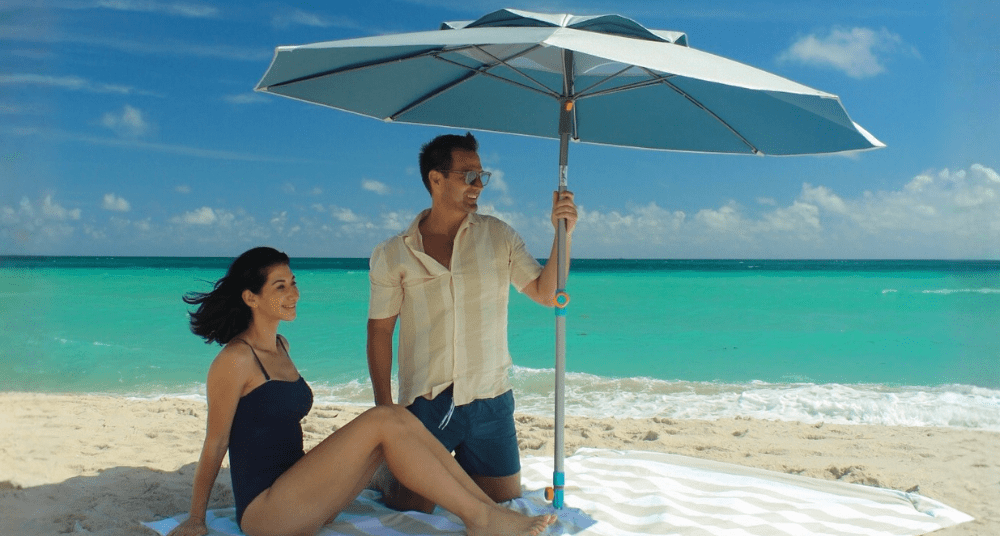
Our canopies, blankets and wristlets are made with RPET (recycled polyester) — a durable fabric spun from post-consumer plastic bottles. It's soft, it's strong, and it performs like the virgin material it replaces.
As the founder of Handy Beach Goods, I wanted to explain how that actually works — and to be clear about what recycled content does and doesn't mean, because this is an area where a lot of marketing gets vague.
Step 1 — Collecting & Cleaning the Bottles
Every RPET canopy starts with post-consumer PET bottles collected through municipal recycling streams — the same bins in your kitchen and on your street.
Those bottles are sorted, cleaned, and shredded into small flakes, with labels, caps and residue removed along the way.
Each Handy Beach Umbrella canopy uses roughly 80 plastic bottles — bottles that would otherwise have been landfilled or downcycled into something short-lived.
♻️ Further reading: Textile Exchange — how RPET fibers are made
Step 2 — Turning Flakes Into Yarn
The flakes are melted into pellets, then extruded and spun into yarn.
This is the part that surprises people: the resulting fiber is chemically the same material as virgin polyester. Same strength, same flexibility, same resistance to salt and sun. The difference is where the raw material came from — an existing bottle rather than newly extracted petroleum.
Recycled polyester generally requires less energy to produce than virgin polyester, because the hardest chemistry has already been done once. Textile Exchange's research is the best public starting point if you want the numbers.
Step 3 — Weaving Durable, UV-Resistant Fabric
That yarn is woven into a dense, smooth canopy fabric built for coastal conditions — 160gsm, tight-weave, and engineered to resist fading.
We then add a reflective silver layer to the top surface, which does two things: it bounces UV away rather than letting the fabric absorb it, and it reflects infrared heat, so the air underneath stays cooler than it does under a dark canopy.
The result was measured at an independent solar laboratory: 0.008% UV transmission — 99.99% of UV blocked.
That's worth putting in context. Consumer UPF labels in the U.S. cap at 50+ under ASTM D6603, and a UPF 50 fabric passes about 2% of UV. Ours passes 0.008%, which is roughly 250 times less. The label has no way to show that difference, which is why we publish the transmission number instead.
👉 Also read: Beach umbrellas miss the mark on UV — here's what to look for
Step 4 — Building Something That Lasts
Here's the part that matters most, and it isn't about the fabric at all.
Recycled content is only half of what makes a product sustainable. The other half is how long it lasts. A canopy made from 80 recycled bottles that falls apart in one season is worse for the world than a durable one made from virgin polyester — because the second one doesn't need replacing four times.
So every Handy canopy is sewn with reinforced stitching, built around a frame that has been independently wind tunnel tested, and designed so individual parts can be replaced. A worn canopy means a new canopy, not a new umbrella.
Durable and recycled together is the goal. Durable alone still beats disposable.
🌊 Further reading: National Geographic — how plastic bottles are recycled into polyester (video)
What RPET Does — and What It Doesn't
We'd rather be straight with you than lean on vague language, so here's the honest version.
What it does:
- Each umbrella canopy is made from roughly 80 post-consumer plastic bottles, about 40 per blanket and 8 per wristlet
- It uses material that already exists rather than requiring newly extracted petroleum
- It performs identically to virgin polyester, so there's no durability trade-off in choosing it
- It supports a market for collected bottles, which is what makes recycling economically viable in the first place
What it doesn't do:
- It isn't carbon-free. Recycling uses energy, and so does shipping
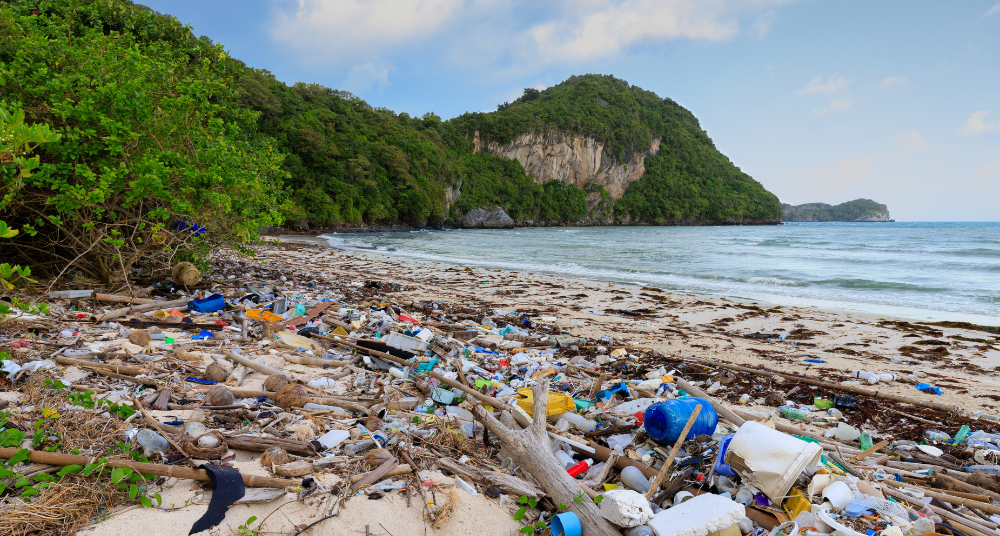
- It doesn't remove plastic from the ocean — bottle feedstock comes from land-based recycling streams
- Not every part of our products is RPET. The steel anchor and aluminum pole aren't, and can't be
Recycled fabric is a genuinely better choice than virgin polyester. It isn't a solution to plastic pollution, and we'd be overselling it if we said otherwise.
Frequently Asked Questions
What is RPET fabric made from?
RPET stands for recycled polyethylene terephthalate. It's a polyester fiber made by collecting used PET plastic bottles, cleaning and shredding them into flakes, melting those into pellets, and spinning the result into yarn.
Is RPET made from ocean plastic?
Ours isn't, and most RPET on the market isn't either. The bottle stock comes from municipal recycling streams — household and commercial collection on land. Some brands do use ocean-bound plastic, meaning material gathered near coastlines before it reaches the water, but that's a specific and separate supply chain. We think it's worth being clear about the difference, because the two get blurred a lot in marketing.
Is RPET as strong as regular polyester?
Yes. It's chemically the same material, so strength, flexibility and durability are comparable to virgin polyester. The difference is in where the raw material came from, not in how it performs.
How many bottles are in a Handy Beach Umbrella?
Roughly 80 recycled plastic bottles per canopy. The blanket uses about 40 and the wristlet about 8.
Does recycled fabric fade faster in the sun?
No. Fade resistance comes from weave density, dye quality and fabric finish rather than from whether the polyester is recycled. Our canopy is a 160gsm tight weave chosen specifically for coastal sun and salt.
Ready for shade built from recycled bottles?
Explore the Handy Beach Umbrella & Anchor System — roughly 80 recycled bottles per canopy, independently wind tunnel tested, and built so every part can be replaced.
Shopping for someone else? We've put together a guide to sustainable beach gifts — gear built to last rather than to be replaced.
About the Author
Written by Agnes, co-founder of Handy Beach Goods and a Florida mom of two. When she launched Handy Beach Goods, the goal wasn't just to make beach days easier — it was to make them more considered. Designing with recycled materials was the right place to start.