30-Second Summary: The definitive 2026 beach packing checklist from Florida-based coastal-gear engineers. Covers the core non-negotiables, wind-safe shade (an ASTM F3681-compliant umbrella with a hammer-in sand anchor), sand-free hacks with our dual-sided glove, the 3-in-1 pillow for napping and swims, and a full family checklist. Pack smart. Relax more. Come back next summer with gear that still works.
A perfect beach day is a reset for the soul. It's the feeling of sun on your skin, the sound of the waves, and the joy of unplugging. But a great beach day doesn't just happen by accident. It's the result of smart preparation.
Conversely, a bad beach day is almost always a failure to plan. It's the scorching sunburn, the gritty sandwiches, the soggy phone, or the dreaded moment you have to chase your umbrella down the beach.
As Florida-based beach lovers, product engineers, and parents, we've experienced it all. We've spent years perfecting the art of the stress-free beach trip, which is what inspired us to create Handy Beach Goods in the first place. We're not just selling gear; we're offering a better, safer, and easier beach experience.
This is our definitive, expert-built guide to packing for the perfect beach day. We've organized it into "clusters" of essentials so you can pack smarter, not harder, and finally relax, knowing you have everything you need.
Seasonal Note: Planning a holiday getaway? If you're heading south between November and March, the conditions are different. See our specialized guide: The Winter Beach Road Trip: What to Pack in the Car.
Looking for the specific gear we use? This article is your complete checklist of what to bring. For a review of the exact, field-tested products we designed to solve these problems, see our Guide to the Best Beach Gear Setup.
The 7 "Non-Negotiables": Your Core Beach Essentials
If you pack nothing else, pack these. This is the foundational kit for any successful trip to the shore, from a quick solo visit to a full-family outing.
- Broad-Spectrum Sunscreen (SPF 30+): This is a health and safety essential. The Skin Cancer Foundation recommends a water-resistant, broad-spectrum sunscreen with an SPF of 30 or higher, and emphasizes that clothing is the first line of defense. Apply 30 minutes before you go and reapply every two hours, or after swimming.
- Plenty of Water: Dehydration is the fastest way to ruin a beach day. The combination of sun, salt, and heat drains your body of moisture. Pack more than you think you'll need, preferably in insulated, reusable bottles.
- The Right Beach Towels: You need two per person: one for lounging on the sand and one for drying off. A dedicated, sand-resistant blanket for your "home base" is even better.
- A "Grab-and-Go" Essentials Bag: Don't let your most valuable items get lost in the chaos. Our water-resistant Wet/Dry Wristlet clips to your chair, tosses in your main bag, or wears on your wrist for a walk to the water.
- A Fully Charged Phone: Beyond photos, your phone is your connection to weather alerts and tide charts. Bring a power bank if you'll be out all day.
- A Sand Remover & Sunscreen Applicator Glove: The single easiest way to leave sand at the beach where it belongs. Our dual-sided Sand Remover Glove brushes sand off skin cleanly on one side and applies sunscreen without messy hands on the other. Turns the "sandy car ride home" problem into a ten-second brush-down.
- A 3-in-1 Beach Pillow, Dry Bag & Swim Buoy: One item that solves three problems. Our 3-in-1 is a supportive cushion for napping, a waterproof dry bag for your phone and keys during a swim, and a bright, high-visibility swim buoy so boats and lifeguards can see you in the water.

Keep your essentials safe, dry, and sand-free. The water-resistant Wristlet Pouch & Wet/Dry Bag protects your phone, keys, and wallet from splashes and sand.
Beach Safety & Shade: Your Most Important Decision
Let's talk about the single most important piece of gear you'll bring: your beach umbrella. A bad umbrella is an inconvenience. A dangerous one can be catastrophic.
Every year, people are injured by runaway or airborne beach umbrellas. The U.S. Consumer Product Safety Commission has been asked to address the danger, with data showing over 31,000 umbrella-related injuries treated in hospitals over a ten-year period. A gust of wind can turn a flimsy umbrella into a projectile, and a simple beach day into an emergency room visit. We cover this in our guide to preventing airborne umbrellas.
This is why, as product designers, we focused on this problem first. Your number one priority for shade shouldn't be color or style — it should be safety and wind resistance.
How do I choose a wind-resistant beach umbrella?
The most critical factor isn't the umbrella itself, but its anchor. A screw-in "corkscrew" anchor, or just digging a hole, isn't enough to secure an umbrella against strong coastal winds. You need a system that anchors deep. For a full breakdown of what separates a safe umbrella from a dangerous one, read our complete Beach Umbrella Wind Safety & ASTM Guide.
What is the ASTM F3681 Standard? (And Why You Should Care)
You wouldn't buy a car seat that wasn't safety tested. So why buy safety equipment for the beach that hasn't been tested against the very thing it's meant to withstand?
ASTM F3681 is an independent safety standard establishing performance requirements for beach umbrellas and their anchor systems, so they don't detach from the sand in wind. It's currently the clearest objective measure of whether a shade system actually holds.
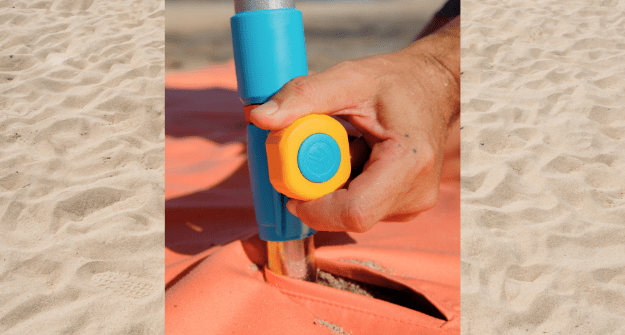
Our Handy Umbrella & Anchor System has been independently wind tunnel tested and is compliant with ASTM F3681, at wind speeds up to 30 mph. The hammer-in sand anchor drives two feet deep in about ten seconds — no digging, no twisting, no sandbags. Backed by a 5-year anchor warranty and 2-year canopy warranty, because gear designed for real coastal conditions should last more than one summer.
When you're packing your shade, ask yourself: has it actually been wind tested? If not, you may be packing a liability. For a full breakdown of how our system compares, see our 2026 comparative review.
WATCH: See the 10-second setup in action. The built-in hammering anchor means no digging, no twisting, and no stress — just a secure umbrella every time.
Your Shade & Safety Checklist:
- Wind-Tested Umbrella & Anchor: Our Umbrella & Anchor System, with a 10-second setup.
- A canopy that actually blocks UV: Don't just block the wind. Our silver-topped canopy was independently lab tested at 0.008% UV transmission — 99.99% blocked.
- First-Aid Kit: Bandages, antiseptic wipes, pain relievers.

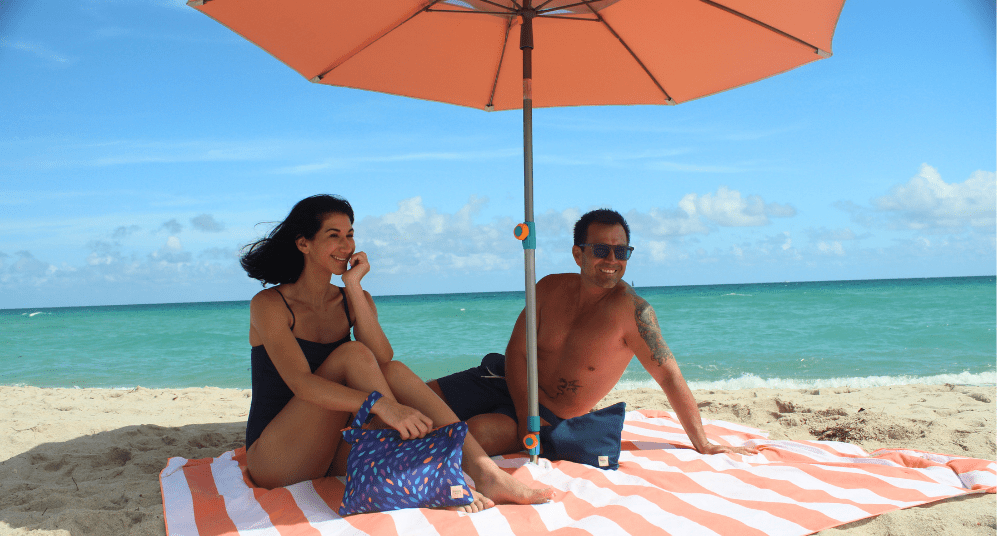
Our 7-foot Handy Beach Umbrella provides a wide area of shade, but its real value is in the engineering. The reinforced frame and deep-set anchor are built for real coastal winds.
The Comfort Zone: Sand-Free Hacks & Lounging
There are two types of people: those who don't mind the sand, and those who know how to avoid it. We're firmly in the second camp. Keeping your "home base" comfortable and sand-free is the key to truly relaxing.
What is the best way to stay sand-free at the beach?
The best way to stay sand-free is a multi-step system. Start with a sand-resistant blanket as your base, use a dedicated sand-remover glove to brush skin clean before packing up, use mesh bags that let sand fall through, and put drinks and food on your cooler lid instead of in the sand.
We built our Beach Blanket around this problem: a quick-dry top surface, waterproof underside, sand-pocket corner anchors, and a built-in umbrella port that locks your whole setup together — no bunching, no flying away, no gritty edges creeping into your snacks.
Rest, Nap & Water-Sport Gear
Half the joy of a great beach day is knowing you can nap without stress, or swim without leaving your valuables unprotected. Our 3-in-1 Inflatable Beach Pillow, Waterproof Dry Bag & Swim Buoy was designed for exactly that.
- As a pillow: cushioned support for reading or napping under the umbrella
- As a dry bag: protects phone, keys, and wallet during a swim
- As a swim buoy: a bright, high-visibility float so boats and lifeguards can spot you, and something to hold onto if you want to stop and catch your breath
A note on the buoy: it's a visibility aid, not a life jacket. It isn't a Coast Guard-approved personal flotation device and doesn't replace swimming ability, supervision, or a lifeguard.
Your Sand-Free Checklist:
- Sand Remover & Sunscreen Applicator Glove: Brushes sand off skin cleanly on one side, applies sunscreen without messy hands on the other. Especially useful for kids and end-of-day cleanup.
- A Quality Sand-Repellent Beach Blanket: Your base of operations.
- Cornstarch or Baby Powder: A classic backup hack for removing sticky sand from skin.
- A Mesh Tote Bag: For sand toys and wet items. Shake it out before it goes in the car.
- A Dedicated Rinse Bottle: A jug of tap water from home for a final rinse of feet and hands.
- The "Cooler Lid Platform": As covered in our favorite beach hacks guide, always put drinks and food on the cooler lid, never in the sand.

The perfect "home base." Our Sand-Repellent Beach Blanket has a quick-dry, sand-shedding surface and an integrated umbrella port to keep your setup anchored and clean.
Beach Packing List for Food, Drinks & Organization
A well-packed cooler is a beautiful thing. The key is packing smart to prevent soggy food and maximize cold retention.
- Hard-Sided Cooler: Better insulation for a long day.
- Ice Packs: Freeze water bottles to double as ice packs you can drink as they melt.
- Easy-to-Eat Snacks: Grapes, pretzels, protein bars, pre-cut veggies.
- Pre-Made Sandwiches: In sealed containers, to avoid cooler-sog.
- Extra Drinks: Seltzers, juice boxes for kids.
- Trash Bags: Pack it in, pack it out. Always leave the beach cleaner than you found it.
Keeping Your Valuables Safe & Dry
Your phone, keys, and cash are magnets for sand and water. A Ziploc bag is a temporary fix; a dedicated solution is better. Our Wet/Dry Wristlet handles daily wear — water-resistant lining keeps essentials dry from splashes, sand-resistant outer means you can toss it on the blanket without worry. For swims, the 3-in-1 doubles as a bright floating dry bag that keeps your phone visible in the water.
What to Wear: Sun Protection & Comfort
Dressing for the beach is more than your swimsuit; it's a key part of your sun safety strategy.
- Swimsuit: Wear it under your clothes to save time.
- A cover-up: A light, airy shirt or dress for extra sun protection or a walk.
- Wide-Brimmed Sun Hat: Protects your scalp, face, and neck.
- UV-Blocking Sunglasses: Non-negotiable for protecting your eyes long-term.
- A Change of Dry Clothes: Nobody likes the soggy ride home.
- Flip-Flops or Sandals: For hot sand and public restrooms.
The "Fun" Bag: What to Bring for Kids & Activities
Once safety and comfort are locked down, pack the fun.
- Sand Toys: Buckets, shovels, molds — in a mesh bag.
- Boogie Boards or Skimboards: For active kids and adults.
- A Portable Speaker: Keep the volume respectful of your neighbors.
- A Good Book or E-Reader: For when it's finally time to relax.
- Beach Ball or Frisbee: For open, uncrowded areas.
Our Ethos: How to Be a Sustainable Beach-Goer
A core part of our mission at Handy Beach Goods is protecting the coastlines that bring us so much joy. A perfect beach day also means being a responsible one.
- Pack Out What You Pack In: Bring your own trash bags and leave no trace.
- Choose Reusable: Ditch single-use plastic bottles and bags.
- Choose Gear Built to Last: Our umbrella canopies, blankets, and bags are 100% RPET — made from recycled plastic bottles rather than virgin polyester. Roughly 80 bottles per umbrella canopy, 40 per blanket, and 8 per large wristlet. And because every part of the umbrella system is replaceable, a worn canopy means a new canopy, not a new umbrella. You can read more about our sustainability mission and our partnership with Debris Free Ocean.
- Fill a Hole: If you see an abandoned hole from another family, be a good beach citizen and fill it in. Holes are a real hazard for sea turtles and other beach-goers.
Holiday Shopping Tip: looking for the perfect gear for the beach lover in your life? See our complete beach gift guide, organized by recipient.
Ready to Build the Complete Kit?
Every product mentioned in this guide was designed to solve a specific beach-day problem. The complete Handy setup — umbrella, blanket, wristlet, 3-in-1 pillow, and sand remover glove — works as a system, not a collection of gear.
Build your set and unlock exclusive upgrades →
Frequently Asked Questions
What are the 5 most important things to pack for the beach?
Sunscreen, water, a sand-resistant blanket, an ASTM F3681-compliant beach umbrella, and a wristlet or dry bag for valuables. Everything else is comfort or convenience — these five are the non-negotiables. Two bonus items experienced beach-goers never leave home without: a dual-sided sand remover glove, and a 3-in-1 pillow / dry bag / swim buoy.
How long should a quality beach umbrella last?
A well-engineered beach umbrella should last at least five summers of regular use. Look for a metal rather than fiberglass frame, replaceable parts sold separately, and a written warranty — ours is 5 years on the anchor and 2 years on the canopy. Cheap umbrellas that fail after one season aren't a bargain; they're a recurring tax on your beach days.
What's the difference between a beach umbrella and a beach tent or shelter?
A beach umbrella gives fast, adjustable overhead shade for two or three people and sets up in about ten seconds. Beach tents and wind-powered shades cover larger groups but need staking on multiple sides, take longer, and can't be repositioned as easily. For families of two to four, a properly anchored umbrella is more flexible. For groups of six or more, a tent may be worth the setup time — though check your beach's rules first, as tents are restricted in a growing number of towns.
What's the best beach umbrella for wind?
One that's been independently wind tunnel tested and is compliant with the ASTM F3681 safety standard. The Handy Umbrella & Anchor System is tested at wind speeds up to 30 mph, with a built-in hammer-in steel anchor that drives two feet deep in ten seconds — no digging, no sandbags — and a silver-topped canopy lab tested at 0.008% UV transmission.
How do I keep sand off my blanket and gear?
Use a sand-resistant quick-dry blanket as your base, pair it with a sand remover glove for skin, and put drinks and food on the cooler lid instead of in the sand. Those three habits eliminate most of the "sand comes home with us" problem.
What should I look for in a beach umbrella if I'm bringing a baby?
Shade is the priority — the American Academy of Pediatrics advises keeping infants under six months out of direct sunlight, and recommends shade and protective clothing as the first line of defense. For an umbrella used around a baby, three things matter: that it's anchored securely, because an umbrella that comes loose near an infant is the real hazard; that it genuinely blocks UV; and that it holds its position so the shade doesn't drift off them while you're not looking. Ours is wind tunnel tested and compliant with ASTM F3681, and lab tested at 0.008% UV transmission. Talk to your pediatrician about sun exposure for very young babies.
What UV protection should I look for in a beach umbrella?
Ask for the UV transmission percentage, not the UPF rating. The consumer UPF scale is capped at 50+ under ASTM D6603, so a fabric blocking 98% and one blocking 99.99% carry exactly the same label. A UPF 50 fabric passes about 2% of UV. Ours was independently lab tested at 0.008% — roughly 250 times less.
How do I stay cool under my beach umbrella?
Choose an umbrella with a heat-reflective silver top layer. Dark fabrics absorb solar energy and re-radiate that heat downward into your shade. A silver-topped canopy reflects infrared radiation away instead of absorbing it, which is why it feels noticeably cooler underneath than sitting under a dark-colored canopy.
Your Final "At-the-Door" Checklist
You're ready. Before you walk out the door, do a final check.
- The Big 3: Umbrella & Anchor System, cooler, beach bag.
- The Valuables: Phone, keys, wallet — in their wristlet.
- The Home Kit: Beach blanket, extra towel, dry clothes.
- The Handy Signature Kit: Sand Remover Glove + 3-in-1 Pillow / Dry Bag / Swim Buoy.
- The Family: Got the kids? Got the dog?
You're all set. By building a smart, repeatable packing system based on safety, comfort, and sustainability, you eliminate the stress and guarantee a great day. From our beach-loving family to yours, we'll see you on the sand.
Ready to build your perfect beach kit? Shop our wind-tested, ASTM F3681-compliant Umbrella & Anchor System.
About the Author
Agnes is a Florida-based mom of two, beach lover, and the co-founder of Handy Beach Goods. Frustrated by flimsy, dangerous, and hard-to-use gear, she began designing her own solutions to make beach days safer and more relaxing for everyone.