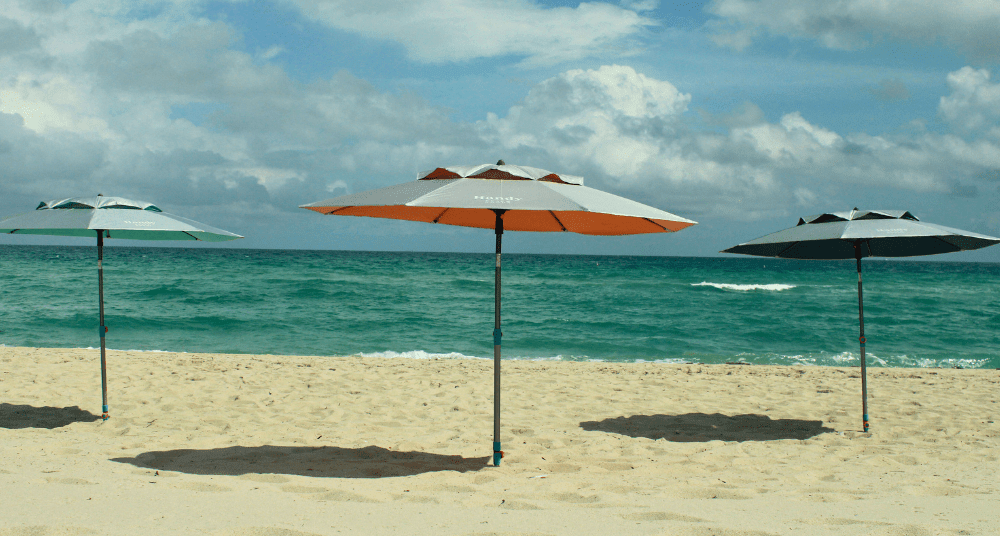
30-Second Summary: Peak summer brings the highest UV of the year and midday heat to match. A thin, unlined polyester umbrella isn't much help: it absorbs the sun's energy and radiates it back down at you, and it lets a measurable share of UV through the weave. What you want is a dense canopy with a reflective top layer. The Handy Beach Umbrella canopy was independently lab measured at 0.008% UV transmission—it blocks 99.99% of UV—and its reflective silver top layer bounces infrared away before the fabric absorbs it, so the air underneath stays cooler. It also goes up in about 10 seconds, which matters more than it sounds when the sand is too hot to kneel on.
How to Stay Cool at the Beach: Heat & UV Safety
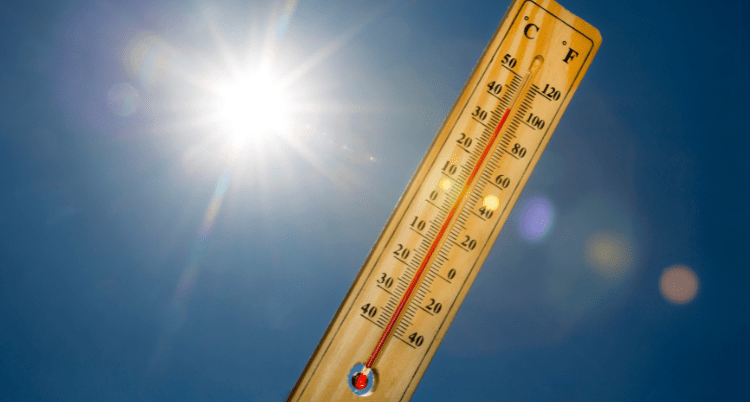
In the hottest stretch of summer—roughly late July through August in most of the US—ocean water is at its warmest, humidity is thick, and UV index readings hit their annual peak.
On a day like that, shade isn't an afterthought. Sitting in 95-degree coastal heat takes more than throwing a shadow over a chair. You want gear that protects your skin, doesn't cost you energy to set up, and works alongside sensible hydration.
Here's why thin umbrellas fail in extreme heat, what to look for instead, and the official safety guidance worth following.
The Greenhouse Effect of Thin Umbrellas
Ever sat under a beach umbrella and still felt like you were baking? That isn't your imagination.
Most budget umbrellas are made from low-density, unlined polyester. They block visible light, which is why it looks shady—but they don't block infrared, and they don't stop ambient UV. Instead the fabric absorbs the sun's energy, heats up, and radiates that heat back down onto your head and shoulders. You're sitting inside a brightly coloured greenhouse.
Thin fabrics also let a share of direct UV through the weave itself. When the UV index is peaking, that's enough to burn you while you believe you're protected. (We went into this in more detail in fake shade: why you can burn under an umbrella.)
The Solution: A Dense, Silver-topped Canopy
An umbrella is not an air conditioner. If it's 95 degrees on the beach, the air will be warm. What a good canopy can do is block the direct radiant heat and the UV that drive your body temperature up.
We built the Handy Umbrella & Anchor System around that job.
1. A Denser Canopy
Our canopy is 160gsm vented fabric—substantially heavier than the thin material used in most beach-store umbrellas. Denser fabric intercepts more of the sun's energy before it reaches you, and the vent lets hot air escape from under the dome instead of pooling there. The result is a darker, cooler space underneath.
2. The Silver top layer, and What the Number Actually Is
The top of the canopy carries a reflective silver layer. It bounces infrared heat away rather than absorbing and re-radiating it, which is the difference between shade that merely looks dark and shade that actually feels cooler.
On UV, here's the honest version. Consumer UPF labels in the U.S. top out at 50+ under ASTM D6603—everything at or above that level is written the same way, so the label alone can't tell you how far past the line a canopy sits. That's why we publish the measurement instead: our canopy was independently lab measured at 0.008% UV transmission, meaning it blocks 99.99% of UVA and UVB.
Shade is one layer, not the whole answer—UV reflects off sand and water and reaches you from the sides regardless of what's overhead. Sunscreen still belongs in the bag. (Our guide to UPF vs SPF covers how the two work together.)
3. The 10-Second, No-Sweat Setup
The CDC advises against heavy physical exertion during peak heat. At 1:00 PM in August, the last thing you want is to be on your knees digging a hole in scorching sand, or hauling a base that its own manufacturer lists as holding 125 lbs of sand once it's filled.
The Handy anchor uses a built-in steel slide hammer. You can stand upright, slide the handle down a few times, and drive the anchor two feet into the sand. Setup takes about 10 seconds, with very little exertion.
If you're weighing up anchor types, our guide to the best beach umbrella for wind compares all four, and the sand anchor guide covers what holds in hot, dry, loose summer sand.
3 Official Heat-Safety Guidelines for the Beach
Good shade helps, but managing real heat takes a strategy. Three recommendations from the Environmental Protection Agency and the Centers for Disease Control:
- Use the Shadow Rule. The EPA notes UV is most intense between 10:00 AM and 4:00 PM, and offers a simple test: if your shadow on the sand is shorter than you are, UV exposure is at its highest. That's when to be under the umbrella rather than beside it.
- Drink before you're thirsty. Thirst lags behind fluid loss, and on a windy beach you sweat without feeling wet. The CDC's schedule for people working in heat is around a cup of water every 15 to 20 minutes; you need less than that sitting in a chair, but far more than most people drink. Go steady and regular rather than large amounts at once, and skip alcohol—it works against you in the heat.
- Take the plunge. Your body cools by evaporation, and the CDC recommends cool water to bring core temperature down. At the beach that means short, frequent dips. Let the water evaporate off your skin while you sit back under the shade—it's the fastest cooling you'll get all day.
The Final Verdict
A beach day is too good to spend fighting your gear or nursing a burn afterwards. A dense, silver-topped canopy with a measured transmission number behind it, on an anchor you can set standing up, buys you the whole afternoon.
👉 Shop the Handy Umbrella & Anchor System
About the Author
Written by Agnes, co-founder of Handy Beach Goods. As a Florida local, she knows exactly how brutal late-summer coastal heat gets. She helped design the Handy Beach Umbrella around a dense, silver-topped canopy so families can get real shade rather than the greenhouse effect of a thin one.
Frequently Asked Questions
Can you still get sunburned under a beach umbrella?
Yes, and it's more common than people expect. Thin, unlined umbrellas let some direct UV through the fabric weave, and no umbrella protects you from ambient UV bouncing off sand and water and reaching you from the sides. Look for a canopy with a published UV transmission measurement rather than a label alone—and wear sunscreen underneath it regardless.
What does a silver top layer on an umbrella do?
A reflective silver layer on the canopy's top surface does two jobs. It adds a barrier that UV can't pass through, and it reflects infrared heat away instead of absorbing it and radiating it downward. Paired with denser canopy fabric, that's what makes the difference between shade that looks dark and shade that feels cooler. Our canopy measures 0.008% UV transmission—99.99% blocked.
What is the EPA Shadow Rule for sun safety?
It's a quick way to gauge UV risk with no equipment. If your shadow is longer than you are—early morning or late afternoon—UV exposure is lower. If your shadow is shorter than you are, around the middle of the day, UV is at its most intense and you should be in proper shade with sunscreen on.