30-Second Summary: Came home with a sunburn despite sitting under an umbrella all day? You were probably under "Fake Shade." A dark shadow doesn't mean UV protection — thin, loosely woven fabric lets rays straight through. Here's how to tell real shade from fake, why bright sand burns you from below, and what to look for in a canopy.
It's one of the most common — and most painful — beach day mysteries:
"I sat under the beach umbrella all day… so why are my shoulders sunburned?"
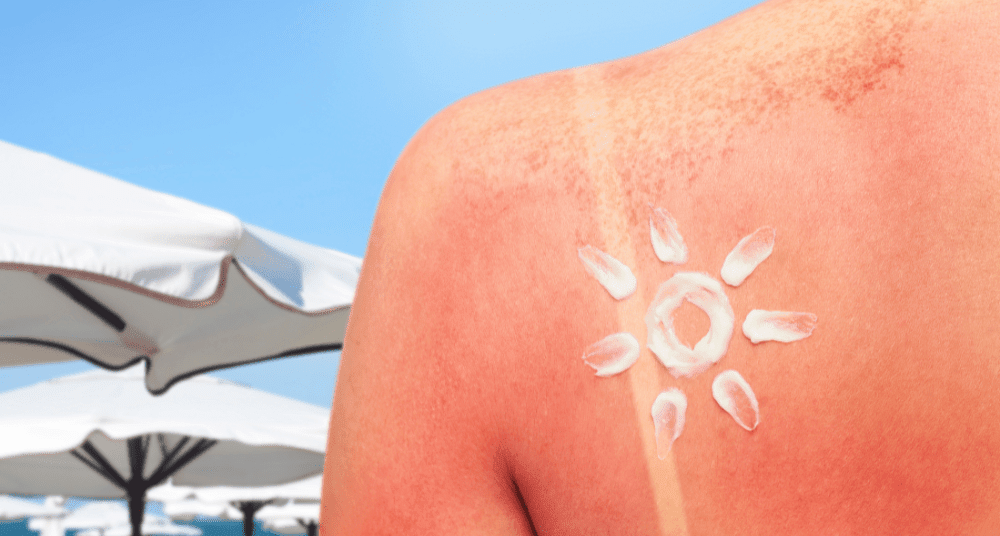
You did everything right. You stayed out of the direct sun. You still got burned.
The culprit is "Fake Shade" — shade that looks like protection and isn't. Here's what's actually happening, and how to fix it.
1. The "Fake Shade" Illusion
Here's the harsh truth: just because an umbrella casts a dark shadow on the sand does not mean it's blocking UV rays.
What matters is the construction of the fabric — how tightly it's woven, how dense it is, and what color it is. Cheap big-box umbrellas are usually made of thin, loosely woven material. They block visible light, which is why you get that convincing dark shadow, but UVA and UVB pass straight through the microscopic gaps in the weave and reach your skin anyway.
Your eyes are measuring brightness. Your skin is being hit by something your eyes can't see.
The Real Shade Hack: You need a dense physical barrier with reflective properties. The 7-foot Handy Beach Umbrella uses a high-density RPET fabric combined with a specialized silver top layer. Instead of absorbing heat and light, the silver layer works like a mirror and bounces the sun's rays away.
We don't guess at our protection levels. Our fabric's UV performance was measured by an independent solar laboratory, which placed it in the "EXCELLENT" protection category and recorded a mean UV transmission of just 0.008% — meaning 99.992% of both UVA and UVB rays are blocked.
That number is worth understanding, because the label can't carry it. Consumer UPF labels in the U.S. top out at 50+ under ASTM D6603, the standard governing UPF testing and labeling. Everything at or above that level is written the same way, so the label alone can't tell you whether a canopy sits just past the line or far beyond it. A UPF 50 fabric passes about 2% of UV. Ours passes 0.008%. That's roughly 250 times less UV reaching you — a difference the label has no way to show, which is why we publish the transmission number instead.
(Want the full picture on how fabric protection compares to sunscreen? Read The Truth About UPF vs SPF.)
2. The "Bounce Effect" — Beware the White Sand
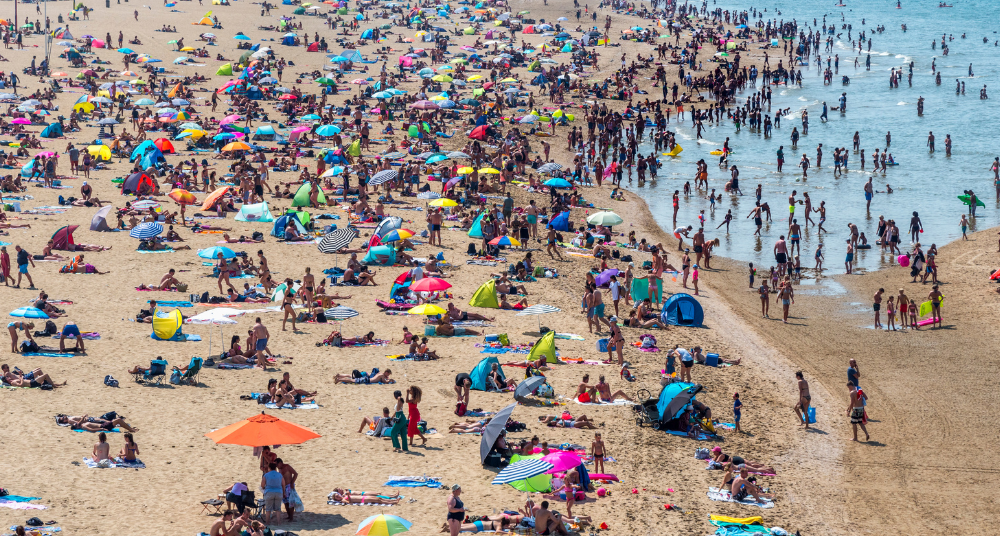
Even with an excellent canopy overhead, you can still burn in the shade. Bright beach sand is highly reflective and bounces roughly 15% of UV back up at you from below — from an angle no canopy can block.
This is why people who never left the shade still end up burned on the underside of the chin, the backs of the arms, the ears, and the tops of the feet. The sun didn't reach them from above. It reached them from the ground.
The Real Shade Hack: This is the one problem shade genuinely cannot solve for you, which makes it the one place sunscreen is doing the real work. Broad-spectrum SPF 30 or higher, applied before you leave rather than once you've settled in, and reapplied every two hours — and again after swimming or toweling off, which takes most of it straight back off.
Pay deliberate attention to the spots the bounce hits: under the chin and jawline, the backs and undersides of the arms, the ears, and the tops of the feet. Those are exactly the places people skip, because we apply sunscreen as though the sun only comes from above.
Covering the sand helps as well. A large Handy Beach Blanket puts a surface between you and the reflective sand you're sitting on, and its reinforced center port is designed for the Handy umbrella pole to pass through, so the shade and the surface anchor together as one setup. But reflected UV still arrives from every direction, so treat the blanket as a comfort upgrade, not a replacement for the sunscreen.
How fabric protection and lotion actually work together — and why you need both — is covered in the truth about UPF vs SPF.
3. Skin That Hasn't Seen the Sun Burns Faster
If you've spent months covered up — a northern winter, a long stretch indoors, or simply the start of the season — your skin has lost much of the gradual adaptation it builds over a summer.
Expose that skin to a high UV index in Florida, the Carolinas or the Caribbean, and it burns considerably faster than the same skin would in late August. The first trip of the season is the one where the margin for error is smallest, and it's exactly the trip where people assume an umbrella is enough.
It's also worth knowing that UV doesn't track with temperature. A breezy 72°F day with a UV index of 8 will burn you faster than a still, humid 90°F day at index 5. Cool air is not low UV — it just removes the warning sign.
4. The Resort Rental Warning
Thinking of just renting an umbrella at the hotel to save luggage space?
Rental umbrellas live outdoors. UV degrades fabric faster than salt does, and a canopy that sits in the sun through an entire season has been getting that exposure every single day. Whatever the fabric blocked when it was new, it blocks less of now — and there's no way for you to tell by looking at it.
There's also the cost. Daily rental rates add up fast over a week, which is the arithmetic behind the Resort Rental Trap.
5. Shade Only Works if It Stays Put
The best UV-blocking canopy in the world is useless if a gust sends it down the beach.
The Handy system solves this with a hammer-in steel anchor, compliant with ASTM F3681, the safety standard for beach umbrellas and anchors, verified by independent wind tunnel testing. Instead of a plastic screw that grips loose surface sand, the steel anchor is driven two feet down into the damp, packed layer — in about 10 seconds, with no digging and no sandbags. Combined with a vented canopy that lets coastal breezes pass through rather than fight them, your shade stays where you put it.
(Augers, sandbag bases, hammering stakes — for how each anchor type actually holds in sand, see our complete sand anchor guide.)
6. The "Moving Shade" of Wind-Powered Canopies
Wind-powered shade sails are everywhere right now, and they're a clever design. But they introduce a sun-safety problem that's easy to miss.
Because they rely on wind to stay aloft, they flap, dip and change shape constantly. That means the shadow they cast is always moving. You settle into what looks like full coverage, the breeze shifts, and the shade slides three feet to the left without you noticing. Over a long afternoon that adds up to a lot of intermittent, direct exposure — and because it arrives in short bursts rather than one continuous dose, you don't feel it happening.
The Real Shade Hack: You want coverage that doesn't move. A structurally anchored umbrella casts the same solid block of shade at 3pm that it cast at 11am, regardless of what the wind is doing. Predictable shade is protective shade. If wind is the main thing you're weighing, our guide to wind-resistant beach umbrellas compares every approach on the market.
The Verdict: Pack Smart, Protect Your Skin
Real shade comes down to four things: dense fabric with published performance, a barrier underneath you, coverage that doesn't move, and an anchor that keeps it there. Miss any one of them and you can spend the whole day under an umbrella and still come home burned.
Your trip should be a chance to relax, not to nurse a sunburn in the hotel room.
Packing your own shade is also easier than people expect. The Handy Umbrella comes in a slim carry bag — clip your water-resistant Handy Wristlet to the strap with your phone and keys and you're set. For everything else worth bringing, work through The Ultimate Beach Packing Checklist before you go.
Don't let fake shade ruin your trip.
Shop the Handy Umbrella & Anchor System
About the Author
Written by Agnes, co-founder of Handy Beach Goods. As a Florida mom, she knows how brutal the southern sun can be on sensitive skin. She designs beach gear with lab-measured sun protection and wind-tested anchoring, made from recycled materials, so families can enjoy the coast safely.