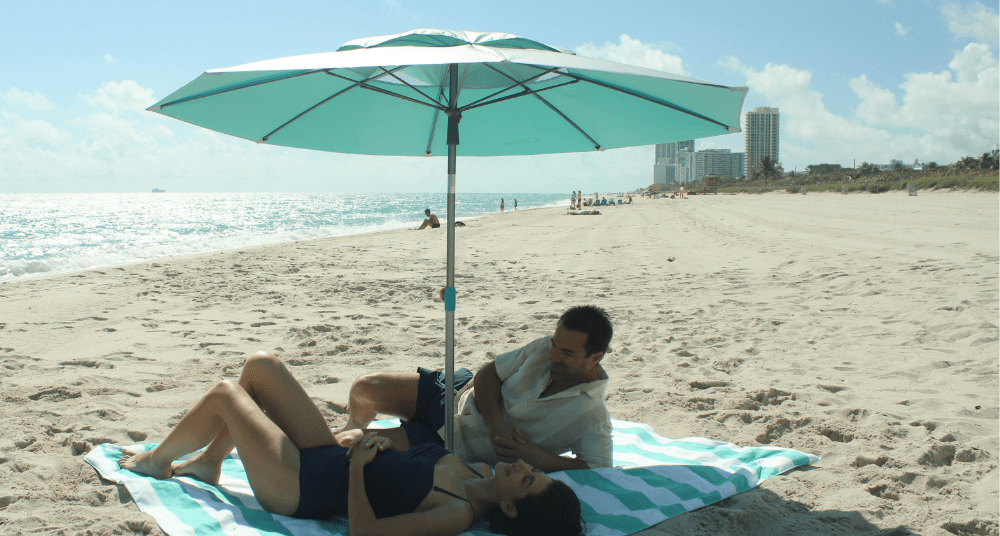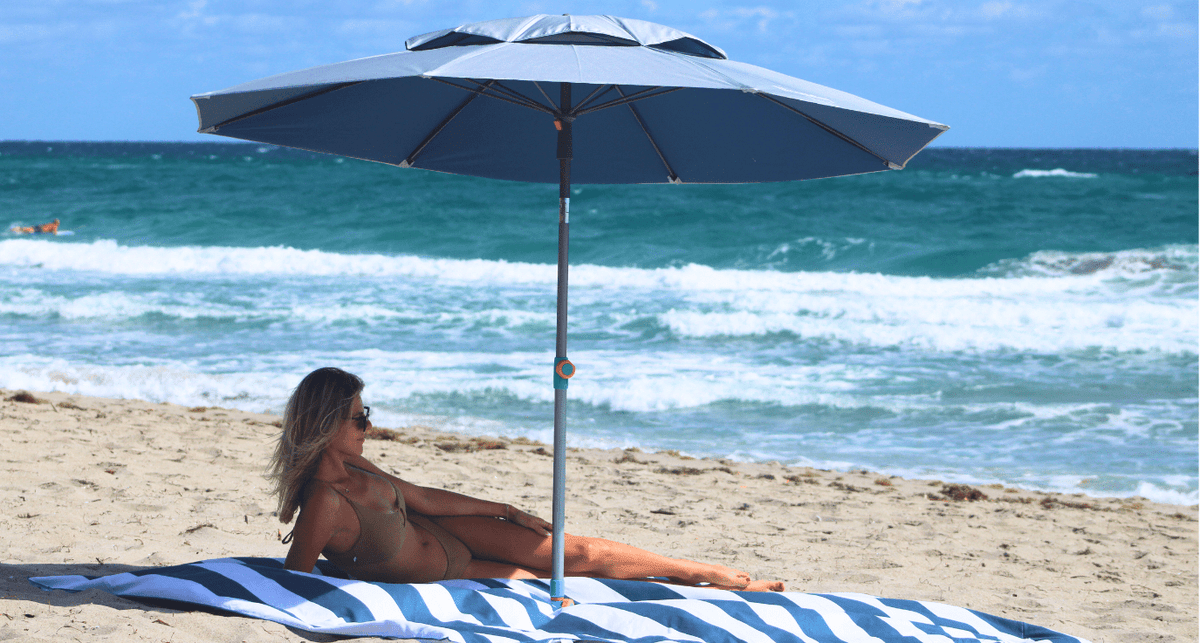
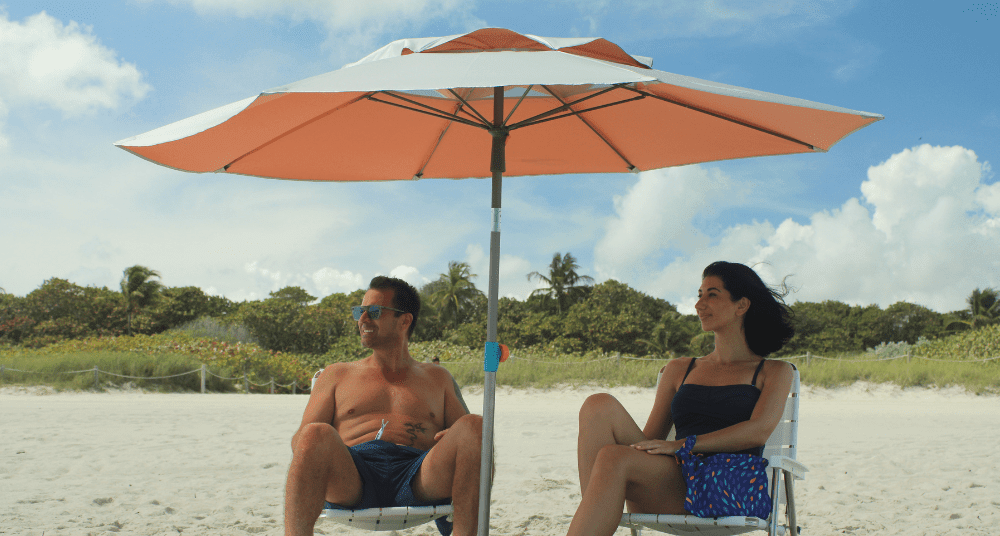
30-second takeaway: The Handy Beach Umbrella & Anchor System sets up in ~10 seconds with a deep, hammer-in steel anchor, is independently wind tunnel tested and compliant with ASTM F3681 for safer hold in real coastal wind, and uses a reflective canopy that blocks 99.99% of UV, made from ~80 recycled bottles.
Beach days are magic — but let’s be honest, setting up isn’t.
I’ve been there, juggling all the things: anchoring an umbrella in shifting sand while dodging sunscreen spills and bracing for surprise gusts of wind. It’s the kind of stress that can ruin a day before it starts, and it’s a core problem we address in The Ultimate Beach Packing Checklist. Whether you’re managing kids, catching up with friends, or just trying to enjoy a moment of peace, the last thing you want is gear that makes beach time harder.
That’s why we built the Handy Beach Umbrella & Anchor System. Not just another umbrella — a smarter way to beach.
Wind-resistant. Truly sun-protective. And up in 10 seconds.
10-second setup — no digging, no twisting, no loose parts
- Set up in about 10 seconds: step the anchor into the sand, hammer it down, slide the pole, open the canopy.
- No plastic augers to twist into hot sand
- No bags to fill or parts to lose
- One-hand friendly when you’re carrying everything else
Real world: the deep-setting steel anchor seats fast, then locks the pole upright so you’re shaded before the snacks melt. No tools, no mess, no mystery pieces.
Quick compare
- Plastic augers: can spin/strip in dry sugar sand
- Sandbags: slow to fill and can still tip in gusts
- Wind-powered shades: depend on a steady breeze to hold their shape
Engineered to stay put in real coastal wind
Most umbrellas lean, twist, or lift once winds shift. Handy’s anchor drives two feet deep, pairing with a reinforced pole, fiberglass ribs, and a vented canopy to resist the usual wobble.
We validated performance with independent wind tunnel testing, and the system is compliant with ASTM F3681, the voluntary safety standard created to reduce flyaway umbrella injuries. Translation: steadier shade you can feel from the Pacific breeze to the Northeast shorelines — and here in Florida where we live.
By contrast
- “Heavy-duty” umbrellas on plastic augers may slip or snap in real gusts
- Sandbag systems hold OK in mild breeze but can tip and are slow to set up
- Wind-powered shades need constant air moving across them to stay open
Real sun protection — because cute doesn’t cut it
Our canopy is RPET with a reflective silver layer on its top surface that blocks 99.99% of UVA/UVB rays and reflects infrared heat, so your shade stays noticeably cooler. The fabric is 160 gsm—about a third heavier than typical fabric used in canopies—which gives a sturdier feel, better blackout coverage, and longer life through real seasons.
Read our deep dive on UV in beach umbrellas
Built to last — because I'm done with throwaway umbrellas
Sturdier materials, fewer replacements. The canopy is RPET made from ~80 recycled bottles, paired with a reinforced steel anchor and fiberglass ribs for strength without bulk. It’s dependable gear for real beach days, not a two-trip wonder.
A better kind of beach gear — for you and the planet
Recycled materials without compromising performance. RPET is made from post-consumer bottles collected through municipal recycling, and it stands up to standing up to salt, sun, and heat. Better shade, lower waste — and comfort you can feel underneath a reflective canopy.
Complete your setup with the Handy Beach Blanket (umbrella port, sand-repellent fabric).
Fast, clean pack-down — because the beach shouldn’t end with a fight
Pack-down is as quick as setup. Pull the anchor, shake off, zip into a roomy carry bag that actually fits. No jammed threads, no cord maze, no guessing what part goes where.
What you won’t miss
- Plastic anchors that jam with sand and need to be unscrewed
- Multi-part systems with poles, cords, and stakes to sort through
- Carry bags that seem to shrink by the afternoon
It’s the shade I always wished I had — so we made it
I didn’t set out to create beach gear. I wanted something I could set up by myself — fast, wind-resistant, sun-safe, and simple enough for a beach morning that feels like a sprint. Most of all, I wanted to make memories — not messes.
Handy is everything I needed. Nothing I didn’t. Not just easier — just plain better.
If you're tired of:
- Twisting plastic poles into hot sand
- Watching your umbrella take flight
- Hoping it holds “just one more trip”
- Spending more time setting up than relaxing
- Leaving more stressed than when you arrived
…then you’ll get why the Handy Beach Umbrella & Anchor System isn’t just another beach umbrella — it’s built to keep up with real life at the beach.
Warmly,
Agnes — beach lover, mom, and co-founder of Handy Beach Goods
FAQ
What size umbrella is best for wind?
Diameter matters less than anchor quality, frame strength, and venting. A slightly smaller but well-anchored, vented umbrella outperforms a large, flimsy one in gusts.
Do I really need a sand anchor?
Yes. Sand shifts. An actual sand anchor is the difference between “stable shade” and “oops, sorry about your sandwich.” If you’re comparing styles, start here: Anchor Guide
Will a silver-topped canopy feel cooler?
It helps. A reflective top layer reduces radiant heat under the umbrella and boosts sun protection—more in our UV post: Best UV Protection: What to Look For.
How fast should setup be?
Fast enough that you always do it properly—even with kids, coolers, and wind. That’s why we designed a 10-second setup into our system.
How do I keep a beach umbrella from blowing away?
Use a hammer-in steel anchor and drive it fully; keep the pole vertical; lock/tighten all joints; and lower or close the umbrella in strong or shifting gusts. Always follow the manufacturer’s instructions for setup and safety. For a full breakdown, see our guide to preventing airborne umbrellas.